TUBA Breast Augmentation with Dr. Shumway | San Diego, CA
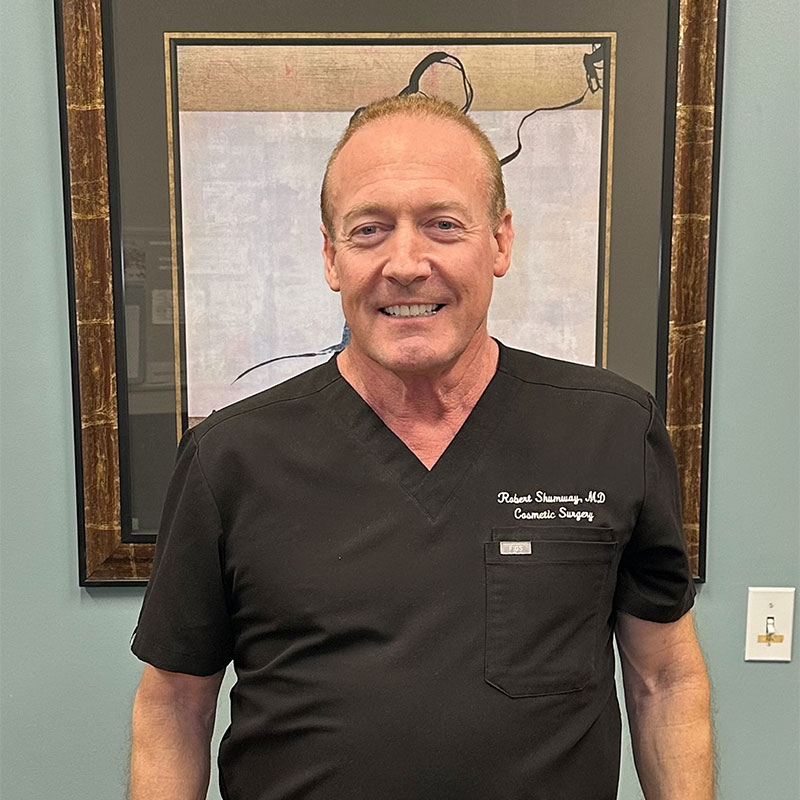
Meet Dr. Shumway
San Diego board-certified facial plastic and cosmetic surgeon Dr. Robert A. Shumway is the Medical Director of Shumway Cosmetic Surgery. With over 20 years of experience, he offers advanced face, breast, body, and skin procedures tailored to each patient’s goals. He is especially known for his expertise in transumbilical breast augmentation (TUBA), a scar-free implant technique performed through the navel, and was the first to bring it to Europe in 2018. Patients considering facial plastic surgery often look for a surgeon who treats the nose as part of the whole face, and Dr. Shumway’s attention to facial balance can help guide rhinoplasty procedures that look natural.
Reviews
TUBA Breast Augmentation Ideal Candidates
- Have moderate breast tissue: Women with very little natural breast tissue may not be ideal candidates for TUBA, as it can be more challenging to create an adequate pocket for the implant. Natural breast tissue may help cover the implant, and Dr. Shumway will evaluate whether your anatomy and chest muscle can support the implant pocket.
- Have a healthy, flat stomach: The procedure requires a healthy belly button area and minimal excess abdominal tissue.
- Desire subtle breast enhancement: TUBA is ideal for those seeking moderate to mild breast augmentation, as it can be more challenging to place very large implants using this technique. Women who want fuller breasts or noticeably larger breasts may be better suited to traditional methods, and implant size is an important part of that discussion.
- Want to avoid visible breast scarring: The primary benefit of TUBA is scar-free breasts, making it perfect for those concerned about visible scarring. TUBA aims for minimal scarring, and the navel incision typically blends into the natural folds of the belly button.
- Are in good overall health: As with any surgery, candidates should be in good health with no serious medical conditions. Your medical history will be reviewed to confirm that surgery is appropriate for you.
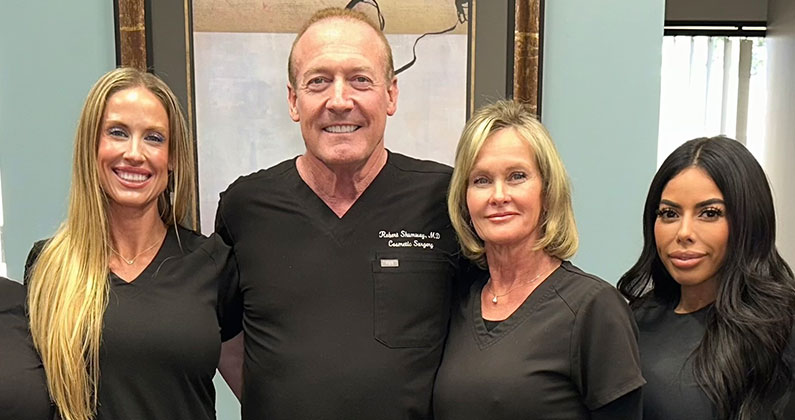
Schedule a Consultation
Ready to take the next step? Schedule your personal consultation with Dr. Shumway today and discover the best options to achieve your aesthetic goals. During your consultation, you can ask about rhinoplasty surgery, nose reshaping surgery, cosmetic rhinoplasty, or a nose job that also addresses breathing, and Dr. Shumway will explain which rhinoplasty procedures may suit you.
La Jolla TUBA Breast Augmentation – Surgical Technique
- Incision: A small incision (approximately 2 cm) is made within the natural folds of the belly button, making it virtually invisible once healed. A very small incision of this kind helps explain why many women opt for this approach, and as the incision heals, it typically blends into the navel.
- Tunnel creation: Through this incision, Dr. Shumway uses specialized instruments to create a tunnel that leads from the navel to the breast area. This tunnel leads to the breast pocket where the implant will sit, so no incisions are needed on the breast itself.
- Implant placement: The breast implants (typically saline, as they can be inserted while empty and then filled once in position) are carefully guided through this tunnel and positioned behind the breast tissue or under the chest muscle. Saline filled implants can be placed empty through a very small incision and then filled with sterile saline solution, while silicone implants are pre-filled with silicone gel and generally require a larger incision.
- Final adjustments: Once in place, the implants are filled with saline solution to the desired size, and final adjustments are made to ensure symmetry and optimal positioning.
- Incision closure: The small incision in the belly button is closed with sutures, leaving no visible scars on the breasts themselves.
Incision Options for Breast Augmentation Surgery
The inframammary incision is a common incision for breast augmentation surgery and is placed in the natural breast crease, also called the inframammary fold, where the scar may be partly hidden. A periareolar incision follows the edge of the areola, and a transaxillary incision is made in the armpit. Each option involves different trade-offs, and an inframammary incision may allow easier placement of silicone implants, which is why Dr. Shumway will review which incision best fits your goals.TUBA Breast Augmentation in La Jolla – What to Expect
- Immediate recovery: After surgery, you’ll spend a short time in the recovery area before being released to go home. You should arrange for someone to drive you home and stay with you for at least the first 24 hours. Because TUBA is an outpatient procedure, you will go home the same day.
- First few days: You’ll experience some swelling, bruising, and discomfort, which can be managed with prescribed pain medications. Many patients report less pain compared to traditional breast augmentation methods. Your recovery period may also include a feeling of tightness across the chest muscle, which usually improves as swelling settles.
- First week: Most patients can return to light activities within 3-5 days, with many resuming work within 1 week (depending on the physical demands of your job).
- First month: Strenuous activities and heavy lifting should be avoided for 4-6 weeks. Dr. Shumway will provide specific guidelines based on your individual recovery progress.
- Long-term results: While you’ll see immediate changes in your breast size, the final results will develop over several months as swelling subsides and the implants settle into their natural position. Your final breast augmentation results, including breast size and natural breast shape, typically become clearer after the implants settle.
Choosing Between Saline and Silicone Breast Implants
Breast implants are filled with either sterile saline solution or silicone gel, and both types have a silicone shell. Saline implants can be filled after placement, which allows a smaller incision, while silicone gel implants are pre-filled and may feel softer and more natural to some women. Dr. Shumway will explain how saline implants, silicone breast implants, and saline and silicone implants compare so you can choose the right breast implants for your goals. Sizing is another important decision. Your implant size should suit your breast size, chest width, and natural breast tissue, and the implant selected should create natural-looking proportions rather than only added volume. Breast implants can be placed above or below the pectoral muscle, and Dr. Shumway will recommend the implant pocket that best fits your anatomy.TUBA Breast Augmentation San Diego – FAQ’s
Is TUBA breast augmentation safe?
Yes, TUBA is considered a safe procedure when performed by a skilled surgeon like Dr. Shumway. As with any surgery, there are inherent risks such as infection, bleeding, and complications with the implants, but these risks are relatively low when the surgery is done properly. Dr. Shumway’s extensive experience with TUBA since 1997 ensures you’re in capable hands. As with any breast surgery, the risks of breast implants can include capsular contracture, in which scar tissue development around the implant causes the breast to feel firm, as well as implant rupture and implant malposition, and some patients need revision surgery to address these concerns. Dr. Shumway will review these risks with you before you undergo breast augmentation surgery.
How long does it take to recover from TUBA surgery?
Recovery time typically ranges from 1 to 2 weeks for most patients, with many returning to light work and activities within this time frame. Full recovery can take 4 to 6 weeks, with final results becoming apparent after several months as swelling subsides and implants settle. Most patients experience less downtime with TUBA compared to traditional breast augmentation techniques. Everyone heals differently, so recovery after a breast augmentation procedure may be shorter or longer for you, and your recovery period will depend on your health and the physical demands of your day.
Does TUBA leave visible scars?
One of the key benefits of TUBA is that it does not leave visible scars on the breasts. The incision is made at the belly button, which is hidden within its natural folds and doesn’t affect the appearance of the breast area. This makes TUBA an excellent choice for women who are concerned about scarring or who frequently wear revealing clothing. Women often ask about minimal scarring, and because the navel incision is small and placed within a natural fold, it typically fades well, though everyone scars differently.
Can I breastfeed after TUBA breast augmentation?
In most cases, TUBA should not affect your ability to breastfeed, as the procedure doesn’t interfere with the milk glands or ducts. Because the approach is through the belly button rather than through the breast tissue itself, there’s minimal disruption to the functional elements of the breast. However, it’s always important to discuss any future breastfeeding plans with Dr. Shumway prior to surgery. Women also ask about nipple sensation, and because the incision is away from the breast, changes in nipple sensation are less likely, though no surgery is risk free.
How long do TUBA implants last?
Implants, whether placed via TUBA or traditional methods, typically last between 10 to 20 years. Regular checkups with Dr. Shumway will help monitor the health of your implants, and you may need to replace or remove them eventually. The longevity of your implants depends on various factors, including implant type, lifestyle, and how your body responds to the implants over time. Over time, implants can develop problems such as implant rupture or capsular contracture, which is one reason regular checkups matter, and revision surgery may be recommended if an implant needs to be replaced.
Can I have TUBA if I've had previous abdominal surgery?
It’s important to discuss any prior surgeries, especially abdominal procedures like tummy tucks or C-sections, with Dr. Shumway. While many patients with a history of abdominal surgery are still good candidates for TUBA, it depends on the nature and extent of the prior surgery and how it might have affected the tissue between the navel and breast area. During your consultation, Dr. Shumway will evaluate your specific situation. A previous tummy tuck, for example, may change the tissue near the navel, so Dr. Shumway may recommend a different approach to breast augmentation surgery, such as an inframammary incision.
What type of implants can be used with TUBA?
TUBA is typically performed using saline implants, as they can be inserted while empty and then filled once properly positioned. This allows for a smaller incision in the belly button. Silicone implants generally require a larger incision and are therefore usually not used with the TUBA technique. Dr. Shumway will discuss implant options during your consultation to help you make the best choice for your goals. Saline breast implants and silicone breast implants both have a silicone shell, and silicone gel implants are pre-filled, which is why they usually need a larger incision. Some patients compare saline and silicone implants for how they look and feel, and Dr. Shumway can explain how each option may suit you.
How is TUBA different from traditional breast augmentation?
The key difference is in the incision location. Traditional breast augmentation uses incisions either around the areola, under the breast fold, or in the armpit. TUBA uses a single incision in the belly button, leaving no scars on the breasts. TUBA is also generally less invasive with a quicker recovery time since there’s less disruption to the breast tissue itself. However, TUBA may have some limitations regarding implant size and type compared to traditional approaches. Belly button breast augmentation keeps the incision at the navel, while traditional methods place it on or near the breast. Patients who want larger breasts or fuller breasts may also compare how breast implants of different sizes and types affect the final shape of the breast.
Who pioneered TUBA in San Diego?
Dr. Robert Shumway was the first surgeon to perform TUBA in San Diego in 1997, setting the standard for this unique approach to breast augmentation. With decades of experience specifically with this technique, Dr. Shumway is recognized as one of the leading TUBA specialists in Southern California and is one of the few surgeons in the region to offer this innovative procedure. Transumbilical breast augmentation requires specialized training, so patients may wish to ask about a surgeon’s experience with the technique.
How do I know if TUBA is right for me?
TUBA is ideal for women who want to avoid scarring on the breast and prefer a minimally invasive approach. The best way to determine if TUBA is right for you is to schedule a consultation with Dr. Shumway. During this appointment, he will assess your anatomy, discuss your aesthetic goals, review your medical history, and explain all available options. Together, you can decide if TUBA aligns with your needs and expectations. Because every patient is different, your surgical plan may also depend on your breast size, natural breast shape, and the implant size that best fits your frame.
View Our Gallery
Curious about what’s possible? Explore our before and after gallery to see real results from real patients at Shumway Plastic Surgery. Seeing how rhinoplasty surgery and nose reshaping change the nasal tip, nose shape, and facial balance can help you picture your own goals before surgery.

Plan Your Procedure
- Starting
- From $6,000
- Average Procedure Time
- 1 – 2 Hours
- Procedure Recovery Location
- Outpatient
Taking the Next Step
Related Procedures
 Breast Augmentation
 Breast Lift
 Breast Reduction
 Breast Implant Revision
Related Posts
The Five Most Popular Cosmetic Surgery Procedures
These are the top five most popular plastic surgery procedures being performed by cosmetic surgeons in San Diego today.
ReadChoosing the Right Breast Implants for Your Body
Learn about the different types of breast implants and how to choose the best option for your body and aesthetic goals.
Read